
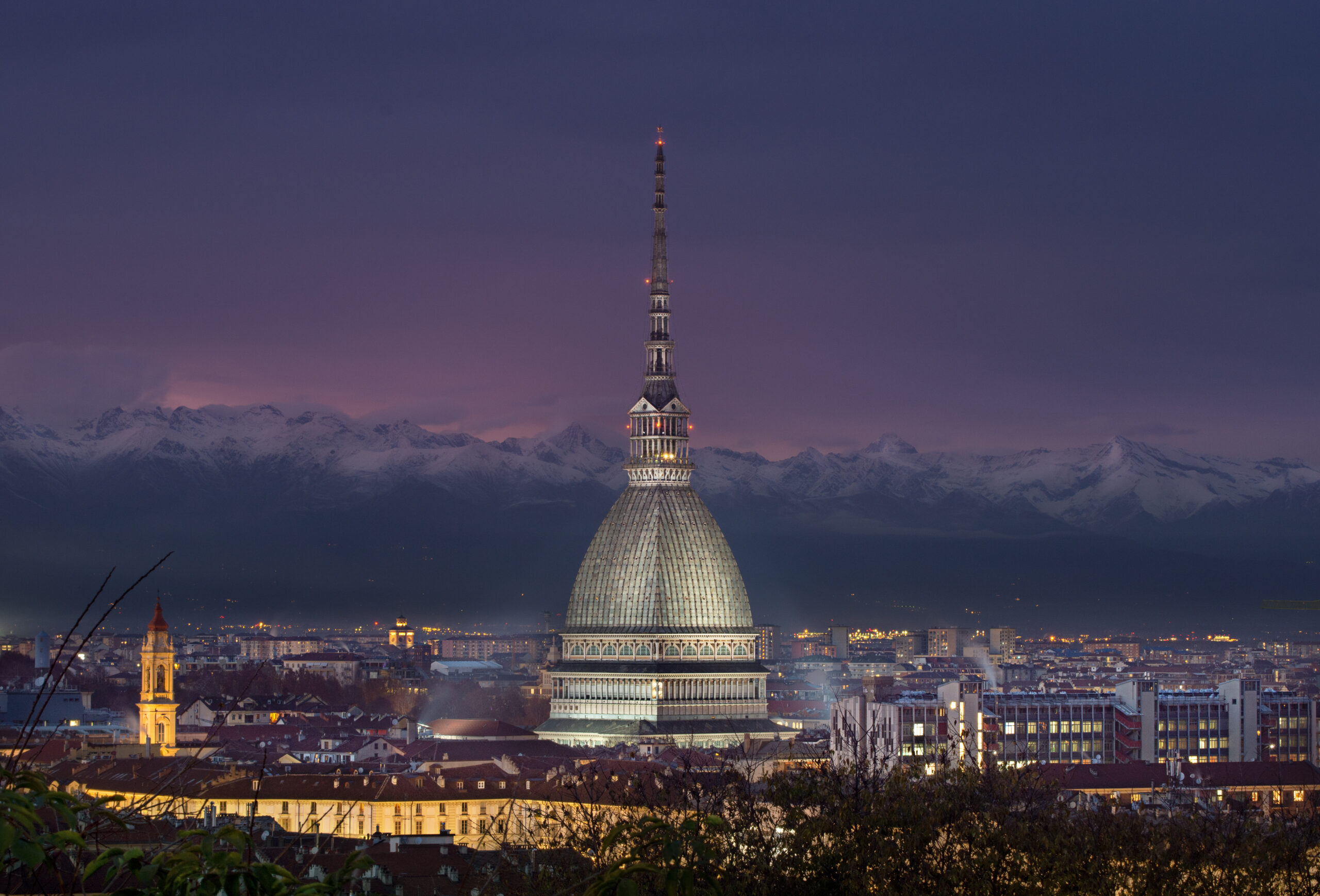
With its flourishing Renaissance, Baroque, and Neoclassical architecture, and a city steeped in rich history, the often-overlooked town of Torino (Turin) in northern Italy has much to offer. Unlike the narrow streets typical of many Italian cities, Turin boasts wide avenues lined with carefully cultivated greenery, creating a unique urban atmosphere.
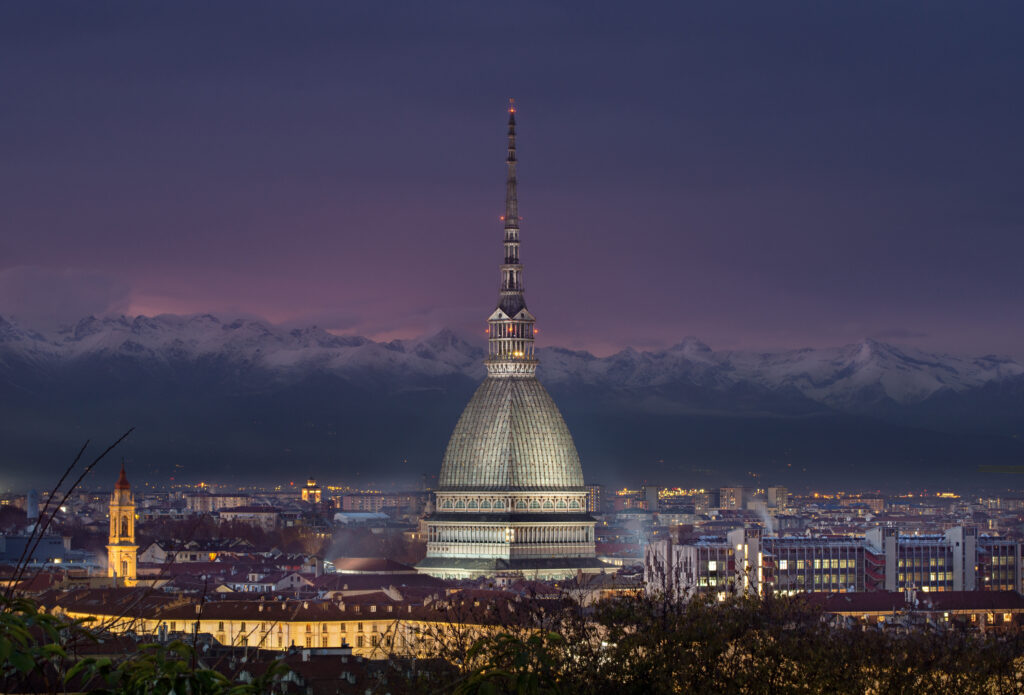
Mole Antonelliana in the evening (Source: wikimedia)

The focus will be on two iconic landmarks in the city center: the Mole Antonelliana and the Royal Palace of Turin. However, the city’s remarkable architectural heritage extends well beyond the central district. The Mole Antonelliana, a defining symbol of Turin, is a must-see attraction. Towering at 167 meters with its distinctive aluminum spire, it was originally intended to be a synagogue but was never used for worship. Today, it houses the Museo Nazionale del Cinema, and the panoramic views of the city from its heights are truly unforgettable.

Torino, Piazza Castello (Source: wikimedia)

Another highlight is Piazza Castello, home to the stunning Royal Palace. This architectural masterpiece now functions as a museum and stands as a testament to the Kingdom of Savoy’s rich history. Visitors can immerse themselves in the royal lifestyle of the past, appreciating the meticulous attention to detail that reflects the grandeur and artistic sensibilities of the monarchy.

Amidst the historical landscape, modern architecture also makes a strong statement. The city’s contemporary spirit is embodied by a sleek skyscraper designed by renowned architect Renzo Piano. Located near the institutional heart of Turin and one of Italy’s largest universities, Politecnico di Torino, the Intesa Sanpaolo Office Building rises boldly at 166 meters, symbolizing the city’s blend of tradition and innovation.
Turin’s architectural landscape is a complex fusion where history and modernity coexist, with each building narrating a chapter in the city’s ongoing story.